Putting accuracy often changes when the golfer feels watched, rushed, or emotionally invested. Under pressure, attention narrows, breathing becomes shallow, and the hands may tighten around the grip. A putt that looked simple on the practice green can suddenly feel unfamiliar. Small details matter.
This guide explores what affects putting accuracy under pressure, including putter-face control, green reading, distance judgment, pre-shot routines, and emotional regulation. Sports-science research and experienced coaching both suggest that consistent routines can reduce unnecessary decisions. However, routines do not remove pressure. They provide a stable process when confidence becomes unstable. A reliable routine may include one green-reading decision, two practice strokes, a clear target, and a committed start.
Picture a four-foot putt for par. Your shoes feel planted, but your shoulders rise slightly. You look at the hole twice, then pull the putter back too quickly. The ball starts left and loses speed near the cup. That moment reveals more than a technical error. It may show rushed timing, poor breathing, or unclear intent. Practical improvement requires measuring these patterns rather than blaming nerves alone.
The approach here combines technical principles, pressure-based practice, and honest self-review. A useful session might record start-line results, distance control, and routine consistency. Some sessions will still feel poor. That is valuable evidence, not failure. Even skilled players misread greens and miss short putts. The goal is not perfect control. It is a repeatable response when control feels difficult.
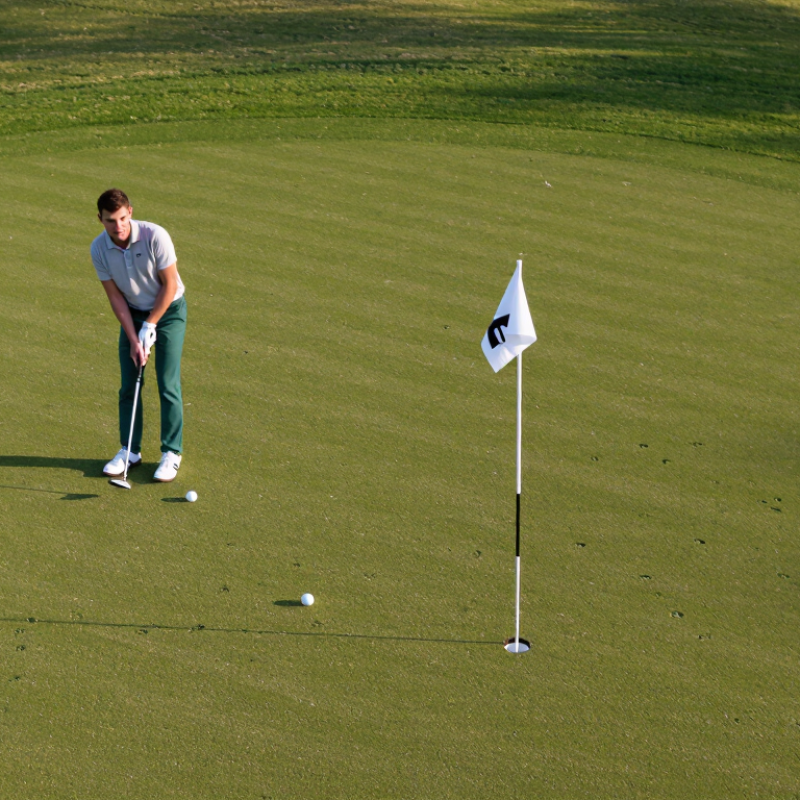
Pressure changes putting accuracy before the stroke begins. Heart rate rises, breathing becomes shallow, and attention shifts toward the consequences. Professional-tour ShotLink tables show the challenge clearly: players make roughly 70% of six-foot putts, but only about 40% from ten feet. These figures describe normal conditions, not final-hole pressure. Under stress, the same distance can feel longer.
Research by Beilock and Carr in the Journal of Experimental Psychology found that pressure can disrupt well-practiced motor skills through excessive self-monitoring. Putting then becomes mechanical. A golfer may consciously control wrist angle, backswing length, and impact speed. That is often too much information. A quiet-eye study by Vine and Wilson, published in the Journal of Sport & Exercise Psychology, linked longer final visual fixation with improved putting performance under pressure.
On the practice green, I use a six-foot circle and one slow breath before every attempt. I look at the target, not the hole’s edge. The routine is useful, but not perfect. I still rush when the putt matters. That reaction deserves attention, rather than denial. Pressure training should include consequences: missed putts end a set, and starting over feels inconvenient. Keep the stroke simple. Use a clear landing point. Then record both make percentage and pre-putt tension, because accuracy alone can hide the real problem.
A reliable pre-putt routine gives your mind fewer decisions under pressure. Start behind the ball and study the putt’s pace, slope, and intended starting line. Notice the final metre before choosing your target. Then step toward the ball with one clear image. I use two practice strokes beside the ball, matching the slope and distance. My final stroke is usually smoother when I breathe out slowly before addressing the ball. It is not perfect. I still rush when the putt matters most.
Tips:
Practice the routine from different distances and lies. Include short putts, long lag putts, and breaking putts. Ask a playing partner to create mild distractions during practice. Record whether your pace, breathing, and setup remain consistent. After each session, write one useful observation. For example, I often discover that my second rehearsal stroke becomes too short. That detail gives me something specific to improve. A routine should feel familiar, not mechanical, and it must leave room for an honest read.
Under pressure, putting accuracy depends on alignment, distance control, and stroke mechanics. I learned this after missing short putts that looked easy. My eyes aimed at the hole, but my putter face pointed elsewhere. Before each putt, I stand behind the ball and choose a small target, such as a leaf or discolored blade. Then I set the face first and place my feet around it. This routine takes only a few seconds. It also exposes poor habits.
Distance control begins with feel, not force. I practice putts toward a towel placed three feet beyond the hole. The goal is to finish near the towel without touching it. I vary the length and slope, because repeating one straight putt creates false confidence. My stroke stays quiet, while the backswing grows naturally with distance. I sometimes decelerate under pressure. That mistake matters. A smooth finish is more reliable than trying to guide the ball.
For stroke mechanics, I use a narrow stance and light grip pressure. The shoulders rock the putter, while the wrists remain calm. Recording a few strokes can reveal a drifting head or uneven rhythm. A qualified golf coach can assess these details more objectively. During competition, alignment may feel uncomfortable. I commit to the selected line, breathe once, and keep my routine unchanged. It is not perfect. The next practice session should examine why.
How to Improve Putting Accuracy Under Pressure?
Training Putting Skills Under Realistic Pressure
Putting practice often feels easy when every attempt has no consequence. Real pressure changes your breathing, grip, and decision-making. Train those changes instead of ignoring them.
Create a simple pressure game with six balls and three marked distances. Use five-foot, eight-foot, and twelve-foot putts. Give each distance a different value. For example, a holed five-footer earns one point, while a twelve-footer earns three. Set a target score before starting. If you miss the target, repeat the drill after a short walk. This adds mild fatigue and prevents practice from feeling overly comfortable.
Use the same routine before every putt. Read the break from both sides, choose a starting line, and take one calm breath. Keep your eyes quiet over the ball. Then make the stroke without extra adjustments. A training partner can add pressure by recording every result silently. You can also limit practice time between putts. Do not rush.
Pressure practice should remain realistic, not theatrical. A missed putt still provides useful information. Was the read wrong, or did the face move? I sometimes blame my stroke too quickly. Video review has shown that my starting line was occasionally poor. That mistake matters. Record the distance, result, and your confidence level after each attempt. Over several sessions, these notes reveal patterns that memory often hides. The goal is not perfect putting. It is a repeatable routine when your hands feel less reliable.
Training Putting Skills Under Realistic Pressure
Putting accuracy typically decreases as pressure increases. Practice sessions that include consequences, time limits, pre-shot routines, and simulated competition can help golfers maintain a more consistent make rate under pressure.
Improving putting accuracy under pressure starts with honest tracking, not hopeful memory. Record every putt during practice and competition. Note distance, slope, break, first-putt result, and three-putt errors. PGA TOUR ShotLink data shows a clear distance effect: professionals make roughly 80% of five-foot putts, but only about 40% from ten feet. Your benchmark may be lower. That is useful, not discouraging.
Create a weekly pressure scorecard. Track make percentage from three, five, and eight feet. Also record distance left after the first putt. The R&A’s amateur participation research highlights consistency and confidence as major parts of golf development, but confidence needs evidence. After four sessions, compare results instead of relying on feelings. If five-foot accuracy falls below your normal range, reduce technical changes and repeat short-putt drills. If lag distance remains poor, practise pace control from 25 to 40 feet.
Add pressure gradually. Begin with ten putts and require eight makes. Miss twice, then restart. Later, use one ball and a full routine. A quiet green can still feel demanding. My own tracking once showed strong practice numbers and weak final-hole results. I had measured makes, but ignored rushed breathing and poor pre-putt decisions. That was a useful flaw. Add a pressure note after each round, including pulse, thoughts, and routine time. Adjust one variable per week. Too many changes hide the real cause.
It reduces decisions when your pulse rises. A familiar sequence keeps attention on pace, slope, and target. It can still break down.
Stand behind the ball and read the slope, pace, and starting line. Watch the final metre carefully. Choose one clear target.
Keep it under 20 seconds. Take two rehearsal strokes with the same rhythm. Longer routines may create extra doubts.
Breathe out slowly before addressing the ball. Use the exhale as a quiet trigger. Do not force it.
Set the putter face before placing your feet. Position your eyes over the ball. Pause briefly, then make the stroke.
Start with ten putts and require eight makes. If you miss twice, restart. A quiet green can still feel demanding.
Track distance, slope, break, makes, and three-putt errors. Record the distance left after each first putt. Memory is not enough.
Change one variable each week. If short-putt accuracy drops, repeat short drills. If lag distance suffers, practise from 25 to 40 feet.
Write down your pulse, thoughts, routine time, and breathing. I once tracked makes but ignored rushed decisions. That was a useful flaw.
Improving putting accuracy under pressure begins with understanding what affects putting accuracy under pressure, including tension, rushed decisions, negative thoughts, and inconsistent focus. A reliable pre-putt routine can calm the mind and create repeatable preparation before every stroke. This routine should include reading the green, selecting a target, visualizing the ball’s path, and taking a consistent stance. Strong fundamentals also matter: accurate alignment, dependable distance control, and smooth stroke mechanics help reduce uncertainty when the outcome feels important.
Effective practice should recreate realistic pressure through challenges such as consequence-based drills, limited attempts, and performance goals. Golfers can gradually learn to maintain focus and trust their technique even when nervous. Tracking results, noting common mistakes, and reviewing emotional responses will reveal which areas need attention. Practice strategies should then be adjusted to target specific weaknesses, helping build confidence, consistency, and greater putting accuracy in competitive situations.

Lulit Golf