7 Tips Why Do Golfers Use Training Aids in Practice?

Time:2026-10-26 Author:Sienna
0%

Golfers use training aids because practice can become vague without clear feedback. A clubface may feel square while pointing several degrees right. An alignment stick can reveal that mistake before it becomes a habit. A putting mirror can expose uneven eyes, poor ball position, or a wandering stroke path.

This article explores seven practical tips explaining why do golfers use training aids in practice. The focus stays on measurable improvement, not expensive equipment. Training aids can improve alignment, tempo, impact position, balance, and distance control. However, they work best when golfers understand the purpose behind each drill. A device should answer a useful question. Is the clubface stable? Is the strike centered? Does the body move consistently?

Tiger Woods has often said, “No matter how good you get, you can always get better.” That mindset fits purposeful practice. Experienced coaches commonly recommend short sessions, repeated feedback, and simple targets. Ten focused swings with an impact bag may teach more than fifty careless swings. Still, no aid can replace sound instruction or honest self-assessment. Some golfers also use aids incorrectly. They chase perfect positions and forget the shot’s real target.

That is worth remembering.

The following tips connect common training aids with specific practice goals. They also explain when an aid may help, when it may confuse, and how golfers can judge progress. Results will differ. Improvement is rarely perfectly linear. Yet a clear routine can make each practice session more informative, practical, and easier to trust.
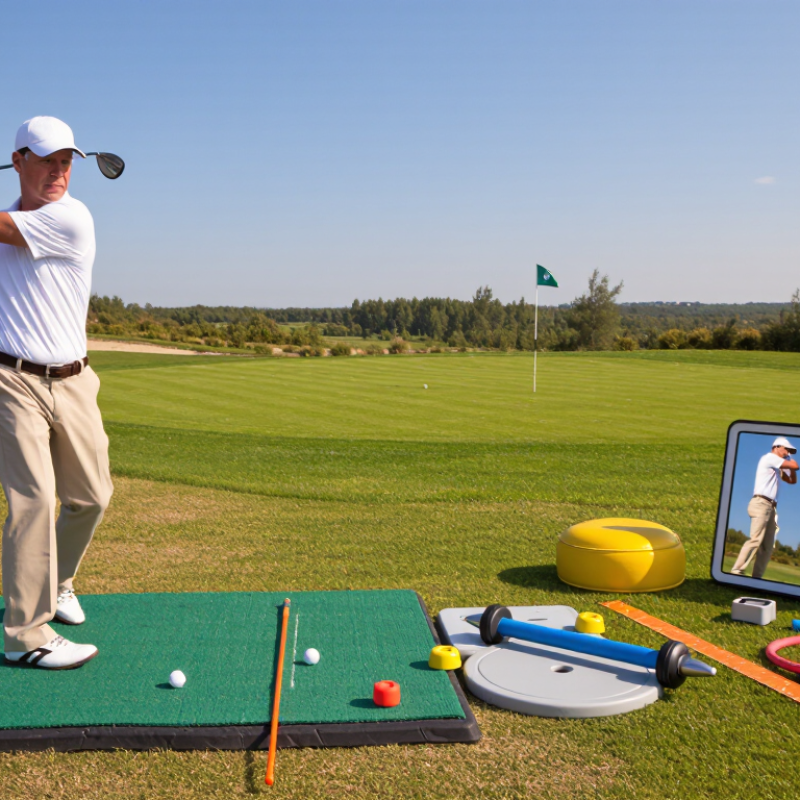
7 Tips Why Do Golfers Use Training Aids in Practice?

Why 28.1 Million U.S. Golfers Use Structured Practice Aids (NGF, 2023)

7 Tips Why Do Golfers Use Training Aids in Practice?

The National Golf Foundation reported 28.1 million U.S. on-course golfers in 2023. That figure shows golf is not a niche pastime. It also explains why structured practice tools attract attention. Many players have limited time, uneven feedback, and no coach beside them.

A simple alignment guide can reveal a misdirected setup before frustration grows. A tempo aid can make a rushed takeaway visible. Small corrections feel more useful when players can repeat them.

The NGF’s 2023 participation research also recorded millions of off-course participants, including beginners and casual players. Practice aids serve this wider group, not only low-handicap golfers. They can support seven practical targets: alignment, grip, posture, tempo, contact, swing path, and distance control.

The R&A’s Golf Around the World 2023 report counted more than 66 million golfers globally, reinforcing the demand for accessible practice methods.

Still, tools do not replace judgment. A perfect-looking drill may build the wrong habit.

I have seen players chase a straight ball while ignoring poor contact. That is a mistake. Use one aid, record a few swings, and compare results over several sessions.

Personal notes matter more than impressive packaging.

Data can guide practice, but feel remains imperfect. That tension is useful. It encourages golfers to test, adjust, and seek qualified instruction when progress stalls.

How Launch Monitors Use TrackMan Data to Improve Distance and Accuracy

7 Tips Why Do Golfers Use Training Aids in Practice?

How Launch Monitors Use Shot Data to Improve Distance and Accuracy

Tip 1: A launch monitor turns practice into measurable feedback. It records ball speed, launch angle, carry distance, spin, and offline direction. During coaching sessions, I compare these numbers with the intended shot, not just the final result. A ball can finish near the target after a poor strike and lucky bounce. Numbers reveal that difference.

Tip 2: Distance control improves when golfers study carry numbers. Total distance can change because of wind, turf, or rollout. Carry is more reliable for choosing clubs over bunkers and water. I often hit ten shots, remove obvious mishits, and study the remaining pattern. Still, removing bad shots may hide a real weakness.

Tip 3: Accuracy requires more than aiming at a target. Launch data can show whether misses come from an open face, poor contact, or an unstable swing path. A player may believe the swing is improving, yet the dispersion pattern says otherwise. That can feel uncomfortable. It is useful feedback.

Tip 4: Training aids work best when golfers connect data with physical sensations. I note where the ball meets the clubface, how balanced the finish feels, and whether contact sounds solid. Then I check the monitor. Data alone cannot explain every swing. It needs careful observation and honest reflection.

Tip 5: Short practice sessions are often more productive. Set one goal, such as improving launch height or reducing left-side misses. Record the change, then repeat the test another day. Results can vary, and that uncertainty matters. A single perfect shot proves very little.

Why Alignment Aids Help Control Face Angle, the Primary Start-Line Factor

Golfers use training aids because practice can hide small alignment errors.

A clubface aimed only two degrees right may send the ball noticeably off target. Modern launch-monitor research estimates that face angle controls roughly 75–85% of the ball’s initial direction, depending on the club and shot. The remaining influence comes mainly from swing path and impact quality. This finding appears consistently in professional ball-flight models and coaching data.

Alignment aids make that invisible error easier to see. A straight stick beside the target line can expose open shoulders, closed hips, or a misdirected clubface. The R&A and USGA’s Distance Insights Report also highlights how launch conditions strongly influence shot outcomes, not distance alone.

In practical sessions, I often place an alignment rod one metre behind the ball. Then I check the face from behind, rather than trusting my eyes from address. It feels awkward at first.

Small details matter.

The leading edge should match the intended start line, while the body supports that direction. A square face with a poor path can still produce a curved shot, so alignment aids cannot replace impact feedback. That is the limitation. Used with measured launch data, however, they connect what golfers feel with what the ball actually does. PGA Tour ShotLink analysis and contemporary coaching research both support this approach: control the start line before chasing perfect shape. My own practice still exposes occasional careless alignment. That is useful. Calibration is never finished.

How Tempo Trainers Build Repeatable Swings Through Measurable Feedback

Golfers use training aids because feel can change from one swing to the next. A tempo trainer creates an external rhythm and makes timing easier to observe. Instead of guessing, players can compare backswing and downswing durations. This measurable feedback turns practice into a clearer experiment.

Start by recording ten normal swings without the aid. Note contact quality, ball direction, and approximate tempo. Then use the trainer at a comfortable speed, not maximum speed. Short sessions work best.

Try slow rehearsals, half swings, and full swings while keeping the same rhythm. A useful goal is a repeatable backswing-to-downswing ratio, often close to three-to-one. It is a guide, not a law.

My own practice mistake was chasing perfect numbers too soon. The swing became stiff. That lesson matters.

A tempo trainer should support motion, not replace awareness. After each set, remove the aid and hit several balls. Check whether the rhythm remains under pressure. Record simple results, such as solid strikes out of ten attempts.

Adjust the tempo when balance disappears, contact drifts, or the finish becomes rushed.

Brief video can reveal pauses that the body does not notice. Coaches can also verify whether the device is encouraging a useful sequence rather than hiding a technical fault.

Progress may look uneven, but repeated measurements make small changes easier to trust.

How to Choose Training Aids by Handicap Using USGA Player Data

How to Choose Training Aids by Handicap Using USGA Player Data

Tip: Start with the golfer’s handicap, but do not stop there. USGA handicap statistics report average Handicap Indexes of about 14 for men and 29 for women. These figures suggest different practice needs, not different abilities. Higher-handicap players often benefit from simple aids that improve contact, alignment, and launch. Choose visible targets, impact feedback, and repeatable setup positions.

Tip: Match the aid to the largest scoring leak. The R&A’s Distance Insights Report shows that distance can influence scoring, but accuracy still shapes many approach shots. A mid-handicap golfer may need an alignment stick, a face-control tool, or a dispersion target. Keep the feedback immediate. I have seen golfers rehearse perfect swings while ignoring their actual miss.

Tip: Low-handicap players need constraints, not more noise. Use narrow landing zones, variable lies, and pressure-based challenges. Track start direction, carry distance, and left-right dispersion.

Tip: Limit practice time for each aid.

Tip: Record ten shots, not one.

Tip: Retest the same skill outdoors.

Tip: Remove any aid that changes the swing but does not improve ball flight.

USGA player data can guide the starting point, yet handicap alone remains imperfect. A 20-handicap golfer with reliable contact may need distance control, while another may need basic strike feedback. That difference matters. Select aids from observed patterns, then review the results after several sessions.

FAQS

Why does face angle matter so much at impact?

Face angle largely controls the ball’s starting direction. A face two degrees open can send shots noticeably right. Small errors matter.

How can an alignment aid reveal setup mistakes?

Place a straight rod about one metre behind the ball. View the target line from behind. It can expose open shoulders, closed hips, or a misdirected clubface.

Can an alignment aid fix every poor shot?

No. A square face with a poor swing path can still create curve. Alignment aids cannot replace impact feedback or launch measurements.

Which training aids suit higher-handicap golfers?

Choose simple tools for contact, alignment, and launch. Use visible targets and repeatable setup positions. Immediate feedback helps.

What should mid-handicap golfers practise?

Find the largest scoring leak. One golfer may need face control, while another needs distance control. Do not trust the handicap alone.

How should low-handicap golfers use training aids?

Add narrow landing zones, uneven lies, and pressure challenges. Track start direction, carry distance, and left-right dispersion. More noise is not better.

How many shots should golfers record during practice?

Record ten shots instead of one. Look for repeated patterns in direction and distance. One excellent shot can mislead you.

When should a golfer stop using a training aid?

Remove it if it changes the swing without improving ball flight. Retest the same skill outdoors. Indoor confidence can be misleading.

Is alignment practice ever finished?

Probably not. My own alignment still becomes careless sometimes. That uncomfortable discovery is useful. Calibration needs regular checking.

Conclusion

Golfers use structured practice tools because focused feedback can turn guesswork into measurable improvement. The question “why do golfers use training aids in practice” is largely answered by their ability to reveal swing patterns, improve consistency, and make practice more efficient. Launch monitors measure factors such as club speed, ball speed, launch angle, spin, carry distance, and direction, helping players understand why shots travel inaccurately or fail to reach their intended distance.

Alignment tools also support better control of the clubface, which strongly influences the ball’s starting line. Tempo trainers help golfers develop a repeatable rhythm by providing feedback on timing and swing sequence. Choosing the right aid should depend on skill level and handicap: beginners may benefit from simple alignment and tempo support, while more experienced players may prefer detailed performance data. Used with clear goals, training aids can make practice more structured, objective, and productive.

Sienna

Sienna

Sienna is a skilled marketing professional with a deep expertise in our company’s core products and services. With a passion for innovation and detail, she plays a pivotal role in crafting insightful blog posts that not only highlight the unique features of our offerings but also provide valuable......