7 Best Reasons Your Golf Game Changes on Each Course

Time:2026-11-23 Author:Liam
0%

Why is my golf performance different on each course? The answer is rarely a single flaw in your swing. A narrow tee shot can make you reach for a shorter club, while firm fairways add roll you may not expect. Wind, elevation, rough, and green speed also change the shots a course asks you to play. Small differences add up.

Golf psychologist Dr. Bob Rotella’s well-known reminder is, “Golf is not a game of perfect.” That perspective helps explain why one difficult round does not automatically mean your technique has fallen apart. This guide explores seven practical reasons scores and confidence can shift from course to course: layout, hazards, turf, weather, green conditions, course management, and familiarity. Look closely at the details. Aiming over a bunker, judging a downhill lie, or reading a grainy green can feel very different from one venue to the next. Your habits and expectations matter, too. Sometimes the course exposes a real weakness; sometimes it simply presents unfamiliar decisions. It is easy to blame your swing. That may be only part of the story. Use the seven reasons as a starting point, then compare notes from your rounds before changing your technique.
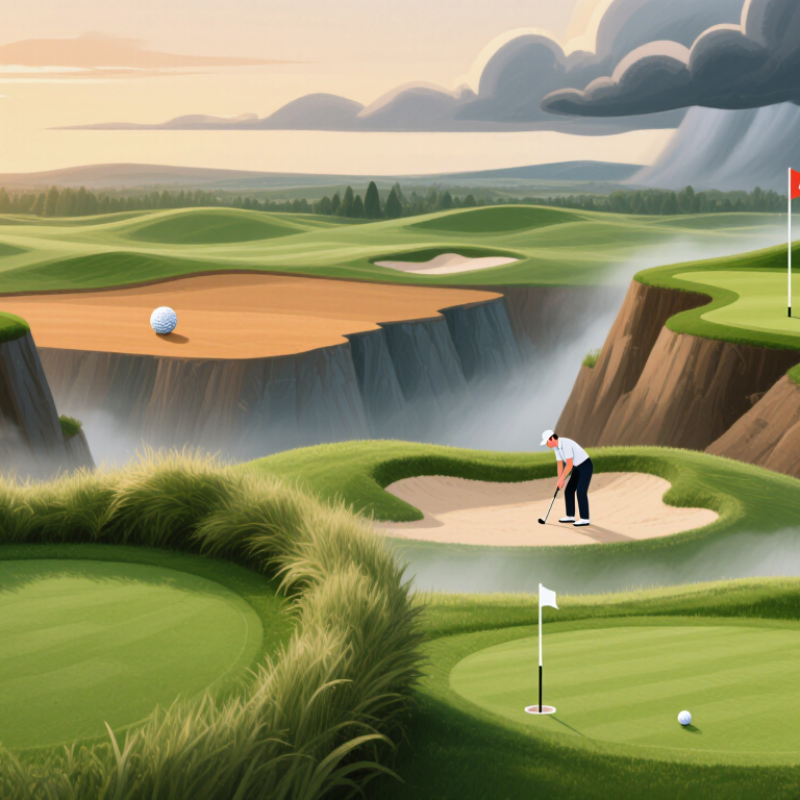
7 Best Reasons Your Golf Game Changes on Each Course

How Golf Course Design Shapes Shot Selection

A golf course changes your decisions before you swing. A wide fairway may invite a driver, while a bunker pinching the landing area can make a shorter club smarter. The tee shot is not only about distance. It is about where the next shot will begin.

I look for the safest angle into the green. A pin tucked behind a bunker may reward a shot from the left side, even if that means aiming away from the flag. Sloping fairways matter too: a ball landing on a sidehill lie can turn a comfortable approach into a guess. Water, trees, and firm ground each change the risk. Sometimes I still choose the aggressive line and regret it. Course design does not make the choice for you, but it makes the trade-offs visible.

Greens shape club selection in quieter ways. A shallow green may leave little room for a long approach, while a raised green can make a low, running shot unreliable. Wind funnels between trees or across open ground, so the same yardage may call for a different club on another course. Before playing, check the course map and note hazards, slopes, and likely landing areas. Then adjust after seeing the conditions. A plan helps, but it is never perfect.

How Terrain and Elevation Affect Ball Flight

Elevation changes the air your ball travels through. At higher courses, thinner air creates less drag, so a well-struck shot can carry farther. The USGA’s golf-ball flight guidance gives a practical estimate of roughly 2% more distance per 1,000 feet of elevation. Treat it as a starting point, not a promise.

Terrain changes the shot, too. An uphill target makes the ball climb and often reduces carry; a downhill target can extend flight and add roll. Sloping lies also tilt the clubface and alter launch direction. A ball above your feet may start left for a right-handed golfer. A ball below your feet may leak right. Wind and temperature complicate the math. The estimate is useful, but it is not exact.

Tips: Check the course’s elevation, then adjust one club at a time. On uphill approaches, focus on solid contact rather than forcing extra distance. For downhill shots, picture the landing area, not just the flag. Keep notes after each round; your own results may disagree with the rule of thumb.

7 Best Reasons Your Golf Game Changes on Each Course

How terrain and elevation affect ball flight: As elevation increases, standard-atmosphere air density decreases. Thinner air creates less aerodynamic drag, so a golf ball may travel farther, all else being equal.

Approximate air-density ratios are calculated from the standard atmosphere. Actual conditions vary with temperature, pressure, humidity, and weather; wind, slope, and course layout also affect play.

How Weather and Wind Change Playing Conditions

Wind changes launch, curve, and landing—not just club selection. The National Weather Service’s Beaufort wind scale classifies 13–18 mph as a “fresh breeze.” On an exposed tee, that can push a high iron shot offline before it reaches the green. A common golf-planning rule estimates roughly one yard of distance lost per mph of headwind, though shot height and spin make that estimate imperfect. Treat it as a starting point, not a promise.

Temperature and gusts add another layer. Cooler air is denser, which can reduce carry, while warm air generally allows the ball to travel farther. A crosswind may also behave differently beside trees, buildings, or a ridge than it does at the clubhouse weather station. Watch leaves and flag movement near your landing area. Then choose a safer target, not merely a different club.

Small adjustments matter. Lowering the ball flight can reduce wind exposure, but it may bring trouble into play around firm greens. I still find wind estimates easy to overtrust; a gust can change during the swing. Check conditions between holes, note whether the wind is steady or shifting, and leave extra room on exposed approaches. A few yards of margin can matter more than a perfect yardage calculation.

7 Best Reasons Your Golf Game Changes on Each Course — How Weather and Wind Change Playing Conditions

These are general playing patterns, not guaranteed yardage adjustments. Actual results depend on the golfer, club, ball, course, and specific conditions.

Reason Condition to Check How It Can Change Play Practical Adjustment
1. Wind speed and direction Wind speed in mph and whether it is a headwind, tailwind, or crosswind. A headwind generally reduces carry, while a tailwind generally increases it. Crosswinds move the ball sideways; the amount varies with shot height, flight time, and wind exposure. Check the wind at the ball and near the target. In a headwind, consider a lower-flight shot or more club; in a crosswind, allow for the expected curve and landing area.
2. Air temperature Compare the day’s temperature with the conditions in which you normally play. Warmer air is less dense than colder air, and a golf ball generally carries farther in warmer conditions. Cold conditions can also make equipment and the ball feel less responsive. Use your own recorded distances in different temperatures rather than relying on a fixed adjustment. Reassess club choice after warming up.
3. Rain and wet air Recent rainfall, active rain, and whether the ball or clubface is wet. Water on the ball or clubface can affect contact and control. Rain-softened ground usually reduces bounce and rollout; heavy rain may also make footing less stable. Keep the clubface and grips as dry as practical. Plan for less rollout on wet fairways and allow extra time to assess footing and lies.
4. Ground firmness and moisture Fairway firmness, surface moisture, and how much the ball releases after landing. Firm, dry ground can produce more bounce and roll. Soft or saturated ground tends to stop the ball sooner, changing total distance even when carry is similar. Watch the first few approach shots and tee shots for landing behavior. Choose landing areas based on expected release, not carry distance alone.
5. Course elevation Course elevation above sea level and the elevation difference between the ball and target. Higher-altitude air is less dense, which can increase carry compared with lower-altitude conditions. Uphill shots generally play longer and downhill shots generally play shorter, though slope and wind affect the result. Use local course guidance or personal distance notes when available. Judge uphill and downhill shots by the target’s elevation as well as the measured distance.
6. Humidity and air density Humidity, temperature, and elevation together; humidity alone is not a complete measure of air density. At the same temperature and pressure, humid air is slightly less dense than dry air. The effect on golf-ball distance is usually small compared with wind, temperature, or elevation. Prioritize wind, temperature, and elevation when choosing a club. Treat humidity as a minor factor rather than making a large distance change for it alone.
7. Trees, terrain, and exposure Whether the hole is sheltered, open, elevated, or bordered by trees and ridges. Trees and terrain can shelter one part of a hole while leaving another exposed. Wind direction and strength may therefore differ between the tee, fairway, and green. Observe treetops, flags, and exposed areas at several points. Recheck conditions before important shots instead of assuming the tee-box wind continues throughout the hole.

How Turf, Hazards, and Green Speed Influence Scoring

A course can make a familiar swing feel unreliable. Firm, dry fairways add rollout; soft turf can stop the same shot quickly. The USGA’s 2020 Distance Insights Project reports average driving distances of about 216 yards for male golfers and 148 yards for female golfers. Those averages are only context: a downwind drive on firm turf may run into a hazard, while a damp landing area may hold. I sometimes focus too much on carry distance and forget to estimate rollout. That is an easy mistake.

Hazards also change the value of a club. A narrow fairway beside water may reward a shorter, controlled shot more than a full swing. Then there is green speed. USGA Green Section guidance describes measuring speed by how far a ball rolls, in feet, using a standard procedure; readings around 9 to 10 feet are common on many greens. Faster surfaces leave less room for a hesitant putt, while slopes and grain can redirect it. Small differences matter. Before playing, check the practice green and notice whether chips release or stop. Even then, I may misread a green’s pace; course conditions shift, and one warm-up putt is not a guarantee.

How Course Familiarity and Strategy Affect Performance

Course familiarity changes decisions before the swing. A player who knows a green’s back-to-front tilt may aim below the pin, while a first-time visitor may see only open space. Yardage alone misses the narrow landing area, the hidden bunker lip, or the wind funnel beside the trees. Small differences matter. Familiarity can help golfers choose safer targets and commit to a club, but it cannot guarantee a better score.

A 2012 analysis by Columbia statistician Mark Broadie, published in Interfaces, examined elite-tour shot data. It attributed roughly two-thirds of performance differences to the long game, with about one-third linked to putting. That finding is not proof that course knowledge improves scores. It does show why a poor target or approach can matter more than one missed putt. On an unfamiliar course, checking carry distance and trouble beyond the landing zone can prevent avoidable errors.

Strategy should adapt to the ground, not just the scorecard. A firm fairway may send a low drive farther; a raised green can reject a shot that looks accurate from below. I still find it easy to overvalue a familiar club choice, even when the lie says otherwise. Before each shot, note the wind, lie, and safest miss. Then choose a target you can actually picture.

FAQS

How does higher elevation affect golf-ball distance?

Thinner air creates less drag, so a solid shot may carry farther. A rough estimate is 2% more distance per 1,000 feet. It is not a promise.

How do uphill and downhill targets change a shot?

An uphill target often reduces carry because the ball climbs. A downhill target may add flight or roll. Picture the landing area, not only the flag.

What happens when the ball is above or below your feet?

For a right-handed golfer, a ball above the feet may start left. A ball below the feet may drift right. The slope can tilt your clubface.

How much distance can a headwind take away?

A common estimate is about one yard per mile per hour of headwind. Shot height and spin change the result. Wind math can be easy to overtrust.

How can crosswinds affect an approach shot?

A crosswind may push the ball off line, especially on exposed tees. Trees, buildings, and ridges can redirect it. Leave room beside the green.

Does temperature change how far the ball travels?

Cooler, denser air can reduce carry. Warm air generally lets the ball travel farther. The difference may be hard to judge during one round.

What should golfers watch when wind conditions change?

Check leaves and flag movement near your landing area. A clubhouse reading may not match the breeze by the green. Gusts shift. Quickly.

How should players adjust for elevation or wind?

Check the course elevation and adjust one club at a time. On uphill shots, aim for solid contact instead of forcing distance. Keep notes; your results may disagree with the estimate.

Conclusion

Your golf game can change from one course to another because each layout asks you to make different decisions. Narrow fairways, strategically placed bunkers, and varied hole shapes influence club selection and shot placement. Changes in terrain and elevation can also alter distance and ball flight, while slopes may affect your stance and the way a shot rolls after landing.

Weather, wind, turf conditions, hazards, and green speed all shape how a course plays and how challenging it feels. Familiarity matters, too: knowing where to aim, which risks to avoid, and how the greens behave can help you plan more confidently. If you’ve wondered, “why is my golf performance different on each course,” the answer often lies in how these changing conditions interact with your skills and strategy.

Liam

Liam

Liam is a dedicated marketing professional with a profound expertise in the industry, where he excels at highlighting the unique advantages of our core products. With a keen understanding of market trends and consumer needs, Liam frequently updates our company’s professional blog, providing......